The world of professional gaming is currently standing on the threshold of a massive technological breakthrough that will redefine how we experience digital movement. As we move into an era dominated by ultra-high refresh rate monitors and sub-millisecond input latency, the role of the Graphics Processing Unit (GPU) has shifted from merely rendering pretty pictures to becoming a critical engine for tactical precision.
Competitive players no longer just look at average frames per second; they now scrutinize the 1% lows and the frame-time consistency that prevents micro-stuttering during intense firefights. As a hardware analyst and performance specialist, she has observed that the latest silicon architectures are specifically designed to reduce the “render queue” bottleneck that previously plagued high-speed gaming.
These next-generation cards are pushing the boundaries of what is possible, allowing titles like Valorant, Counter-Strike 2, and Apex Legends to reach frame rates that were previously thought to be impossible. This evolution is driven by a combination of smaller semiconductor nodes, massive increases in memory bandwidth, and specialized AI cores that handle latency reduction in real-time.
For an esports athlete, having the right GPU is like having a perfectly tuned instrument; it ensures that every mouse flick and keyboard press is reflected on the screen with zero perceived delay. This guide will explore the deep technical architecture of these new GPUs, how they interact with modern CPUs, and which specific models offer the best path to global dominance on the leaderboard.
The transition to next-gen hardware is not just about raw power but about the “intelligence” of the silicon itself. Modern GPUs now feature dedicated hardware for latency monitoring, giving players a real-time look at how much delay exists between their click and the actual photon emission on the screen.
The Architecture of Zero-Latency Gaming
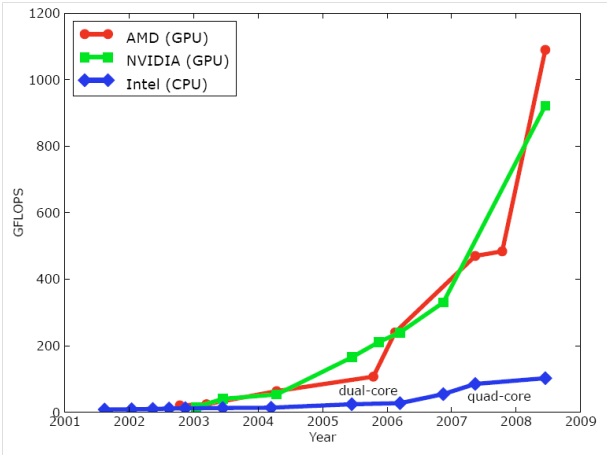
To achieve the best performance in esports, the GPU must be able to process geometry and pixels at a speed that matches the 540Hz or 1000Hz refresh rates of modern monitors. This requires a massive increase in the number of “Stream Processors” and a fundamental change in how the GPU handles the “draw calls” sent by the CPU.
A. Analyzing the move to 3nm and 2nm process nodes for better thermal efficiency.
B. Utilizing increased L2 and L3 cache sizes to reduce memory latency bottlenecks.
C. Investigating the impact of specialized AI-driven latency reduction cores.
D. Assessing the benefits of PCIe 5.0 and 6.0 for faster asset streaming.
E. Managing the power delivery systems to prevent voltage drops during heavy combat.
F. Evaluating the role of asynchronous compute in handling complex utility effects.
G. Analyzing the reduction of “micro-stutter” through improved driver scheduling.
H. Investigating the synergy between the GPU and the high-speed system RAM.
When the GPU has enough onboard cache, it doesn’t need to reach out to the much slower VRAM as often. This results in much more stable frame times, which is the secret sauce for that “buttery smooth” feeling that pros crave. Every millisecond saved in the cache hierarchy is a millisecond gained in your reaction time.
Competitive King: The Flagship Tier Analysis
For those who refuse to compromise, the flagship tier of next-gen GPUs offers a level of performance that can easily saturate even a 1000Hz display at 1080p or 1440p resolutions. These cards are built with massive cooling solutions and premium power delivery to ensure they never throttle during a tournament final.
A. Evaluating the performance of the latest 90-series and 8000-series flagships.
B. Utilizing massive VRAM pools to handle high-resolution texture streaming.
C. Investigating the effectiveness of triple-fan and liquid-cooling designs.
D. Assessing the frame-time consistency in 5v5 tactical shooter scenarios.
E. Managing the physical size constraints of massive modern GPU shrouds.
F. Evaluating the role of specialized “Esports Modes” in manufacturer software.
G. Analyzing the power-to-performance ratio for long-term practice sessions.
H. Investigating the resale value of flagship silicon in the competitive market.
Flagship GPUs are often overkill for standard gaming, but in esports, they provide the “headroom” needed to maintain 1000+ FPS. This ensures that even when ten players throw utility at once, your frame rate remains well above your monitor’s refresh rate. This overhead is vital for preventing the “frame drops” that can cause you to miss a crucial shot.
The Sweet Spot: Mid-Range Value for Grinders
Not everyone has the budget for a flagship card, but the mid-range of the next generation has improved so much that it now outperforms the flagships of just two years ago. These cards are perfect for the serious grinder who wants 500+ FPS without spending thousands of dollars.
A. Analyzing the price-to-performance leaders in the 70-series and 7000-series.
B. Utilizing 12GB and 16GB VRAM configurations for modern competitive titles.
C. Investigating the thermal performance of dual-fan “SFF-friendly” designs.
D. Assessing the impact of “Reflex” and “Anti-Lag” technologies on mid-tier cards.
E. Managing the power requirements for standard 600W to 750W power supplies.
F. Evaluating the overclocking potential of mid-range silicon for extra frames.
G. Analyzing the performance of mid-range cards at 1440p “Competitive” settings.
H. Investigating the build quality of different “AIB” partner models.
The mid-range is where most competitive players live because it offers the best balance of speed and cost. These cards are designed to run cool and quiet, which is great for those who spend 10+ hours a day in practice. With the right settings, these cards can easily power a 360Hz or 540Hz setup without breaking a sweat.
Understanding System Latency and GPU Reflex
In esports, “Total System Latency” is the only metric that truly matters. This is the time it takes for a mouse click to be processed by the PC and displayed on the screen, and the GPU plays a massive role in this chain.
A. Implementing “NVIDIA Reflex” or “AMD Anti-Lag 2” for direct CPU-to-GPU sync.
B. Utilizing “Null Green” latency monitoring to identify bottlenecks.
C. Investigating the impact of “Boost” clock modes on input responsiveness.
D. Assessing the reduction of the “Render Queue” to zero for instant feedback.
E. Managing the background processes that can interfere with GPU scheduling.
F. Evaluating the impact of high-polling rate mice on GPU interrupt requests.
G. Analyzing the difference between “Exclusive Fullscreen” and “Windowed” modes.
H. Investigating the role of the Windows “Hardware Accelerated GPU Scheduling” feature.
By synchronizing the CPU and GPU, these technologies ensure that the GPU starts rendering the frame exactly when the CPU finishes processing the input. This eliminates the “wait time” in the render queue, which can save anywhere from 5ms to 20ms of lag. In a game of inches, this is the difference between a kill and a death.
Optimizing GPU Settings for Maximum Visibility
Having a fast GPU is only half the battle; you must also configure it to ensure that enemies are as visible as possible. This involves tweaking driver-level settings to reduce “visual noise” and enhance the clarity of distant silhouettes.
A. Utilizing “Digital Vibrance” or “Saturation” to make player models pop.
B. Analyzing the impact of “Image Sharpening” on long-range visibility.
C. Investigating the best “Texture Filtering” settings for competitive edge.
D. Assessing the role of “Ambient Occlusion” in spotting shadows.
E. Managing the balance between “Low Latency” and “G-Sync” for smoothness.
F. Evaluating the use of “Custom Resolutions” and “Stretched Res” for target size.
G. Analyzing the impact of “Anti-Aliasing” on frame-time consistency.
H. Investigating the “LOD Bias” tweaks for cleaner competitive environments.
Many pros prefer a “clean” look with minimal shadows and effects to avoid distractions. Using the GPU driver to override game settings can often provide a clearer image than what the game’s menu allows. This “optimization” is a core part of the competitive experience for high-level players.
Memory Bandwidth and the VRAM Revolution
The latest competitive maps are becoming more detailed, requiring more VRAM and faster memory speeds to avoid “stuttering.” Next-gen GPUs utilize GDDR7 or advanced HBM3 memory to ensure that textures are loaded instantly without any hitching.
A. Analyzing the jump to GDDR7 and its impact on memory clock speeds.
B. Utilizing 256-bit and 384-bit memory buses for massive data throughput.
C. Investigating the role of “Resizable BAR” in direct CPU-to-VRAM access.
D. Assessing the impact of memory overclocking on 1% low frame rates.
E. Managing the memory temperatures through advanced thermal pad placement.
F. Evaluating the necessity of 16GB+ VRAM for future esports titles.
G. Analyzing the impact of memory compression techniques on performance.
H. Investigating the synergy between GPU memory and “DirectStorage” APIs.
Memory bandwidth is often the unsung hero of a stable gaming experience. When the memory is fast enough, the GPU never has to wait for data, which keeps the frame delivery perfectly rhythmic. This rhythm is what allows your muscle memory to develop without the interference of random stutters.
CPU and GPU Bottlenecks: Finding the Balance
A common mistake is pairing a next-gen GPU with an older CPU, which creates a “bottleneck” where the GPU sits idle while waiting for the CPU. To get the most out of your hardware, you need a balanced system where both components are equally fast.
A. Analyzing the “Bottleneck Percentage” in 1080p competitive scenarios.
B. Utilizing high-frequency CPUs with large 3D V-Cache for GPU pairing.
C. Investigating the impact of “Infinity Fabric” or “Ring Bus” speeds.
D. Assessing the benefits of Windows 11 “Game Mode” for hardware balancing.
E. Managing the “Power Plan” settings to ensure both chips run at max speed.
F. Evaluating the role of “E-Cores” vs “P-Cores” in GPU task delegation.
G. Analyzing the impact of “Hyper-Threading” on frame-time jitter.
H. Investigating the total system “Power Draw” and PSU efficiency requirements.
In esports, you are almost always “CPU bound” because the graphics are kept at low settings to maximize FPS. This means your CPU needs to be a beast to feed the GPU enough data to reach those 500+ FPS targets. A perfectly balanced system ensures that neither component is holding the other back.
The Future of AI in Competitive Performance
AI is no longer just for upscaling; it is now being used to predict movement and reduce the “noise” in the input-to-output chain. Future GPUs will use specialized AI models to ensure that the frame you see is the most “accurate” representation of the server state.
A. Utilizing “Neural Radiance” to improve lighting without performance loss.
B. Analyzing the potential of AI-driven “Frame Reconstruction” for esports.
C. Investigating the role of AI in “Anti-Cheat” hardware-level integration.
D. Assessing the benefits of “AI Noise Cancellation” for clear team comms.
E. Managing the “Latency Overhead” of running AI models in the background.
F. Evaluating the future of “Cloud-Assisted” rendering for global tournaments.
G. Analyzing the ethical implications of “AI-Assisted” visual clarity.
H. Investigating the development of specialized “Esports Silicon” with built-in AI.
AI is the new frontier of performance, and the brands that master it will dominate the next decade of gaming. We are moving toward a future where the GPU doesn’t just “render” but “understands” the game world. This will lead to a more responsive and fair environment for all competitors.
Conclusion

The evolution of next-gen GPU performance is the primary driver of the current professional esports revolution. These powerful graphics cards are no longer just for visual fidelity but are essential tools for reducing system latency. Achieving a stable 1000 FPS requires a deep understanding of how GPU architecture interacts with high-speed memory and caches.
The introduction of specialized latency-reduction technologies has bridged the gap between human reaction and digital execution. Choosing the right GPU tier is a balance between your competitive ambitions and your budget for hardware investment. Properly configuring your GPU drivers is just as important as the physical silicon sitting inside your computer case.
The synergy between the CPU and GPU remains the most critical factor in preventing the micro-stutters that ruin aim. VRAM bandwidth and GDDR7 technology are ensuring that modern competitive maps remain fluid and stutter-free. AI is becoming a silent partner in the quest for the lowest possible latency and the highest visual clarity. The “Sweet Spot” mid-range GPUs are currently offering better value than any previous generation in history.
Flagship GPUs provide the necessary performance headroom to ensure stability during the most chaotic in-game moments. Every millisecond saved through hardware optimization is a direct advantage in the high-stakes world of professional play. The future of gaming hardware is bright, with performance boundaries being pushed further every single day.