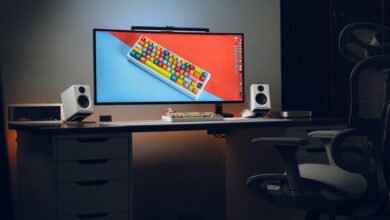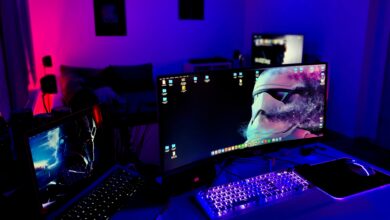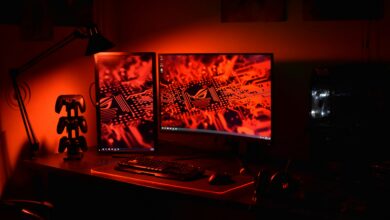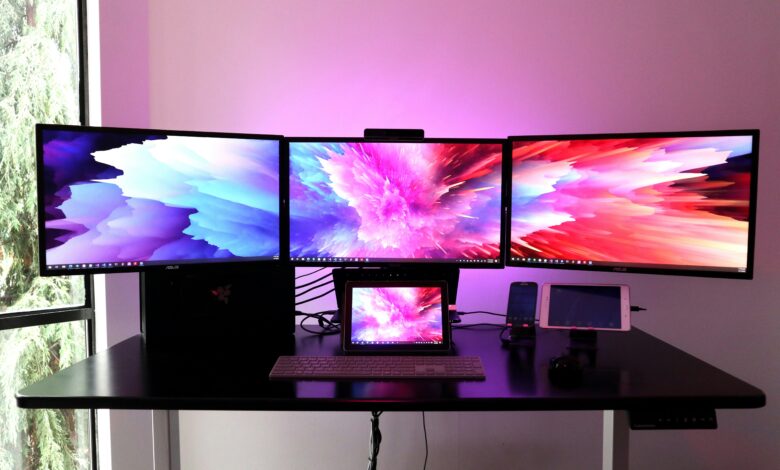
The landscape of professional esports is currently witnessing a technological milestone that was once considered a distant dream: the era of the 1000Hz refresh rate. For years, the industry pushed the boundaries from 144Hz to 240Hz, and eventually to the 540Hz panels that currently sit atop many professional desks.
However, the jump to 1000Hz is not just another incremental upgrade; it is a fundamental shift in how digital motion is rendered and perceived by the human eye. As a hardware analyst and performance specialist, she has observed that at this frequency, the traditional “sample-and-hold” motion blur—the primary enemy of clear tracking—virtually vanishes into thin air.
This evolution demands a complete rethinking of the entire gaming pipeline, from the polling rate of your mouse to the raw processing power of your CPU. Competitive players are always on the hunt for the “unfair advantage,” and 1000Hz represents the closest we have ever come to zero-latency, real-life motion clarity.
This comprehensive guide will break down the elite displays leading this charge, the engineering marvels that make them possible, and the rigorous system requirements needed to harness such extreme speed. We are no longer just playing a game; we are interacting with a digital environment that refreshes at a speed that matches our own neurological processing.
The Science of 1000Hz Motion Clarity

To understand why 1000Hz is the “Holy Grail” for professional play, we must first look at the science of persistence and how our eyes track objects on a screen. Modern LCD and OLED panels hold an image for the duration of a refresh cycle, creating a blur as our eyes move across the static frame.
A. Analyzing the reduction of persistence blur to 1ms or less.
B. Utilizing high-frequency strobing to mimic CRT-like motion clarity.
C. Investigating the impact of 1000Hz on visual tracking and target acquisition.
D. Assessing the psychological “connectedness” between player and crosshair.
E. Managing the visual artifacts that can occur at ultra-high frequencies.
The jump to 1000Hz effectively reduces the time each frame is displayed to exactly one millisecond. This is critical for fast-paced titles like Counter-Strike 2 or Valorant, where a flick shot happens in the blink of an eye. When the motion is this fluid, the brain spends less energy “predicting” where a target will be and more energy on reacting to where the target actually is.
Acer Predator XB273U F6: The Versatile Speed King
Acer has emerged as a frontrunner in this race with the Predator XB273U F6, a monitor that blends high-resolution 1440p gaming with a specialized ultra-speed mode. It is designed for the player who wants a beautiful daily driver but needs world-class speed when the tournament begins.
A. Utilizing “Dual-Mode” technology to toggle between 1440p and 720p 1000Hz.
B. Analyzing the color accuracy of the specialized fast-IPS panel.
C. Investigating the implementation of G-Sync Pulsar for motion clarity.
D. Assessing the ergonomic build quality for professional LAN environments.
E. Managing heat dissipation during prolonged 1000Hz operation.
F. Evaluating the DisplayPort 2.1 bandwidth requirements for uncompressed data.
G. Analyzing the 0.03ms GtG response time consistency across all modes.
H. Investigating the built-in light sensors for optimized competitive visibility.
The “Dual-Mode” feature is particularly clever, as it allows the monitor to act as a 27-inch 1440p screen for general use. When switched to 1000Hz mode, it drops the resolution but increases the responsiveness to a level that is currently unmatched in the consumer market. This versatility makes it one of the most practical high-end investments for a serious gamer.
Samsung Odyssey G60H: The Ultra-Fast OLED Challenger
Samsung is leveraging its dominance in the OLED market to push the refresh rate boundaries even further with the Odyssey G60H. Because OLED pixels can switch states almost instantaneously, they are the perfect candidates for reaching the four-digit refresh rate milestone.
A. Analyzing the sub-0.1ms pixel response times of the OLED substrate.
B. Utilizing the infinite contrast ratio to enhance enemy silhouette visibility.
C. Investigating the 1000Hz “Boost Mode” at 1080p resolution.
D. Assessing the impact of “OLED Care” technologies on long-term longevity.
E. Managing the matte vs. glossy finish debate for competitive play.
F. Evaluating the HDR10+ performance during high-frequency gaming.
G. Analyzing the 360-degree adjustable stand for diverse desk setups.
H. Investigating the internal cooling solutions to prevent thermal throttling.
The G60H offers a visual experience that is strikingly different from traditional IPS panels. The blacks are truly black, meaning that in a dark corner of a map, an enemy’s movement is much easier to spot. This combination of “instant” pixel response and ultra-high refresh rate creates a “ghost-free” image that feels incredibly lifelike.
BenQ Zowie: The Future of Fast-TN Technology
While other brands experiment with IPS and OLED, BenQ Zowie remains the favorite of many pros due to their dedication to the “Fast-TN” panel. Their upcoming 1000Hz prototype is rumored to focus purely on the “DyAc” technology that made them famous in the first place.
A. Analyzing the inherent speed advantages of TN over other panel types.
B. Utilizing “DyAc 3” for the world’s best strobe-based motion clarity.
C. Investigating the “Black eQualizer” 2.0 for improved shadow visibility.
D. Assessing the compact base design to allow for maximum mousepad space.
E. Managing the “Color Vibrance” settings for specific competitive titles.
F. Evaluating the S-Switch functionality for rapid profile adjustments.
G. Analyzing the shield design for reducing peripheral distractions at LAN.
H. Investigating the 1000Hz “Native” driving mode without resolution scaling.
Zowie monitors are built with a “function over form” philosophy that appeals to the most hardcore grinders. A 1000Hz Zowie panel would likely ignore HDR and wide color gamuts in favor of the lowest possible input lag. For many, this specialized focus is what makes Zowie the gold standard for the competitive stage.
GPU and CPU Requirements for 1000Hz Gaming
You cannot simply plug a 1000Hz monitor into a mid-range PC and expect it to work at full capacity. Reaching 1000 frames per second (FPS) is a gargantuan task that requires the absolute best hardware currently available in 2026.
A. Analyzing CPU bottlenecks when aiming for 1000 FPS targets.
B. Utilizing ultra-fast DDR5 or DDR6 memory to stabilize frame times.
C. Investigating the role of PCIe 5.0 and 6.0 in data throughput.
D. Assessing the thermal requirements of a “thousand-frame” rig.
E. Managing the power delivery for overclocked flagship components.
F. Evaluating the role of “Frame Generation” vs. “Native” frames at 1000Hz.
G. Analyzing the importance of 8000Hz polling rate mice for input sync.
H. Investigating the software optimizations needed in Windows and Linux.
Even a game like Valorant requires a top-tier processor to hit a stable 1000 FPS. If your CPU cannot keep up, you will experience “stuttering” which becomes even more noticeable on a high-refresh screen. The entire system must be perfectly tuned, from the BIOS settings to the background processes running in your OS.
Total System Latency: The Mouse-to-Photon Path
When you are playing at 1000Hz, the bottleneck often shifts from the monitor to other parts of your peripherals. To truly feel the benefit of these screens, your mouse and keyboard must also be operating at the highest possible polling rates.
A. Implementing 8000Hz polling rate mice to match the display frequency.
B. Utilizing “Reflex” or “Anti-Lag” technologies to synchronize frames.
C. Investigating the millisecond delays in mechanical vs. optical switches.
D. Assessing the impact of wireless interference on high-speed inputs.
E. Managing the “Input Lag” chain from the sensor to the pixel.
F. Evaluating the use of “Raw Input” in game engine settings.
G. Analyzing the reduction of “micro-stutter” through G-Sync or FreeSync.
H. Investigating the impact of high-speed HDMI 2.1 vs. DP 2.1 cables.
At 1000Hz, the monitor is refreshing every 1ms, but a standard 1000Hz mouse only reports its position every 1ms as well. This can lead to “aliasing” in the movement where the mouse and monitor are slightly out of sync. Upgrading to an 8000Hz mouse ensures that the monitor always has the most up-to-date position data for every single refresh.
The Impact of Resolution Scaling and Integer Scaling
Many 1000Hz monitors utilize resolution scaling to reach their peak speeds. Understanding how “Integer Scaling” works is vital for maintaining a sharp image while playing at lower resolutions like 720p on a 1440p panel.
A. Analyzing the clarity of 2x Integer Scaling from 1440p to 720p.
B. Utilizing “Performance Modes” to maximize frame delivery.
C. Investigating the loss of peripheral detail at lower resolutions.
D. Assessing the competitive trade-off between “Beauty” and “Speed.”
E. Managing the aspect ratio settings to prevent “stretched” images.
F. Evaluating the built-in scalers versus GPU-side scaling.
G. Analyzing the impact of “DLSS” or “FSR” on ultra-high-speed latency.
H. Investigating the “Retina” effect of 1000Hz motion regardless of resolution.
While 720p might sound low by modern standards, at 1000Hz, the motion is so fluid that the perceived detail actually increases. The eye is no longer struggling with blur, which makes it easier to distinguish between an enemy head and the background. For many, the “clarity through motion” is more valuable than the “clarity through pixels.”
Designing the Ultimate 1000Hz Battlestation
The physical environment where you use a 1000Hz monitor also plays a role in your performance. Lighting, desk height, and even the cable management can affect how you perceive the extreme speed of the display.
A. Implementing “Bias Lighting” to reduce eye strain during 1000Hz play.
B. Utilizing high-quality “Certified” cables to prevent signal dropouts.
C. Investigating the impact of desk vibration on high-frequency panels.
D. Assessing the importance of a clean, distraction-free peripheral vision.
E. Managing the cable drag to ensure mouse movements are unhindered.
F. Evaluating the refresh rate “Ghosting” tests using specialized software.
G. Analyzing the optimal viewing distance for 24-inch vs. 27-inch speed panels.
H. Investigating the role of high-speed internet in reducing “Network Latency.”
A 1000Hz monitor is a sensitive piece of equipment that requires a stable environment. High-frequency signals are more susceptible to electromagnetic interference, so using shielded cables is a must. Every detail, down to the surface of your mousepad, should be optimized to complement the speed of the screen.
Conclusion

The “Best 1000Hz Monitors for Competitive Play” represent the absolute peak of modern display technology and human-machine interaction. These screens are no longer just luxury items; they are essential tools for anyone competing at the highest levels of global esports. The elimination of motion blur through ultra-high refresh rates allows the human brain to process visual information with unprecedented clarity. Choosing the right 1000Hz monitor requires a deep understanding of the trade-offs between resolution, panel type, and strobe technology.
A 1000Hz display is only as good as the PC driving it, demanding the most powerful CPUs and GPUs currently available on the market. Synchronizing your mouse polling rate with your monitor refresh rate is the final step in achieving a “zero-lag” gaming experience. The psychological impact of playing on such a responsive system can significantly boost a player’s confidence and decision-making speed.
While 1000Hz might seem like overkill to some, the measurable benefits in tracking accuracy and reaction time are undeniable for pros. We are currently witnessing the birth of a new standard that will define the next decade of competitive gaming hardware. The future of display technology will continue to move toward higher frequencies until the digital image is indistinguishable from reality.
Investing in a 1000Hz monitor today is an investment in the future of your own competitive potential and mechanical mastery. The gap between our physical intentions and the digital result has finally been bridged by the power of one thousand refreshes per second. Ultimately, the best monitor is the one that removes every technical barrier between you and the win.